Book Club
‘Bring the House Down’ by Charlotte Runcie
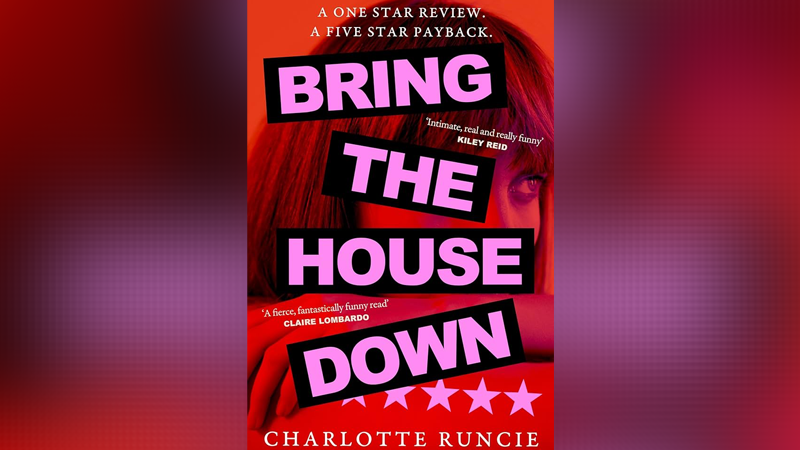
Bring the House Down by Charlotte Runcie centres on Hayley Sinclair, a performer debuting a one woman show at the Edinburgh Fringe, and Alex Lyons, a notoriously acerbic theatre critic who delivers a devastating one star review. The two meet before Hayley realises who he is, setting the stage for a revenge plot that unfolds through the perspective of Sophie, Alex’s colleague and an art critic at the same publication.
The premise is undoubtedly intriguing, and the early setup promises a sharp exploration of power, criticism and gendered dynamics within the arts. While Alex’s behaviour is undeniably unpleasant, the scale of Hayley’s reaction initially feels mismatched, as though he has committed a far greater offence than we are shown. As the story develops, it becomes clear that Alex has a longer history of harmful behaviour towards women, but Hayley herself remains oddly underdeveloped. We are told of her magnetism and allure, yet rarely shown enough to make this feel convincing, and she ultimately comes across as something of a caricature rather than a fully realised character.
Runcie’s writing is accessible and easy to digest, but Sophie’s frequent digressions into art criticism proved a slog. Long descriptions of exhibitions visited during the Fringe felt repetitive and unnecessary, often leaving me wondering what purpose they served within the wider narrative. While some reflections connected meaningfully to Sophie’s relationship with her mother, these moments were not enough to sustain my interest.
The novel also struggles with its focus on the themes. It gestures towards commentary on the #MeToo movement, the experience of returning to work after pregnancy, and living with grief, but never quite commits to any of them. Rather than feeling like a deliberate blend, these themes sit awkwardly alongside one another, creating a sense of confusion about what the book ultimately wants to say.
One detail that particularly pulled me out of the story was Hayley burning items in a bin as part of her show. It is difficult to believe that any Fringe venue would allow this once, let alone repeatedly over the course of nearly a month, and it contributed to an ending that felt unnecessarily over the top.
Overall, I found Bring the House Down disappointing. The premise had real potential, but the execution fell flat. For me, it was neither as funny nor as profound as some reviews suggest.
⭐️⭐️